Inizia a digitare per vedere i suggerimenti
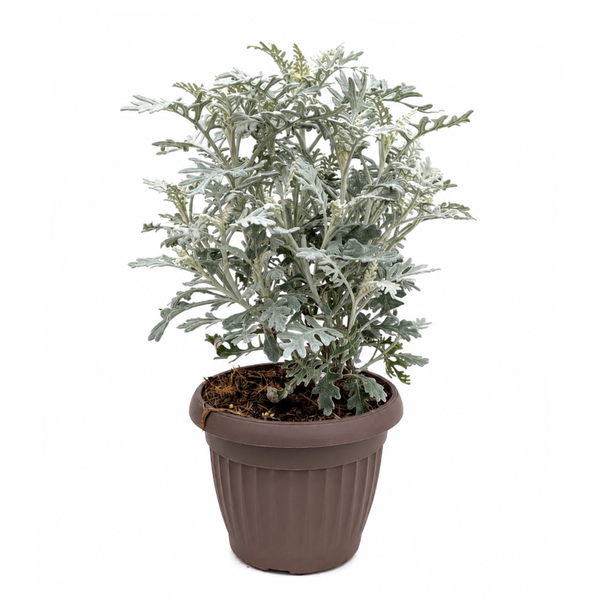
There are plants that don't need flowers to be extraordinary. Dusty Miller is one of them: its deeply lobed leaves, covered in dense, silvery-white hairs that give it a velvety and almost lunar appearance, are a decorative element of rare elegance. A plant that brings light and lightness to any space — balconies, terraces, gardens, and flowerbeds — with disarming simplicity.
Native to the Mediterranean coasts, Dusty Miller has been one of the most beloved ornamental plants for centuries due to its silver foliage, which contrasts beautifully with the green of other plants and the vibrant colors of nearby flowers. A timeless classic of Mediterranean gardening.
Dusty Miller is the ideal plant for creating contrast and depth in floral arrangements: its silver foliage enhances the colors of nearby plants, making whites brighter, reds more intense, and purples deeper. It's the perfect companion for geraniums, petunias, lavenders, and roses.
Resistant to drought, wind, and sea salt, it is one of the most suitable plants for exposed balconies and terraces, even in challenging coastal environments. With an 18 cm pot and a height of approximately 35 cm, it already has a generous and well-structured habit, ready to decorate any space.
Dusty Miller is also a simple and always appreciated gift: a long-lasting, easy-to-care-for, and highly decorative plant, capable of transforming any corner into a touch of natural and Mediterranean elegance.
I terrarium viaggiano su pallet dedicato. Puoi procedere in due modi alternativi: