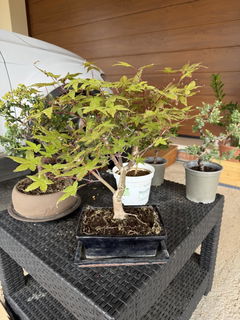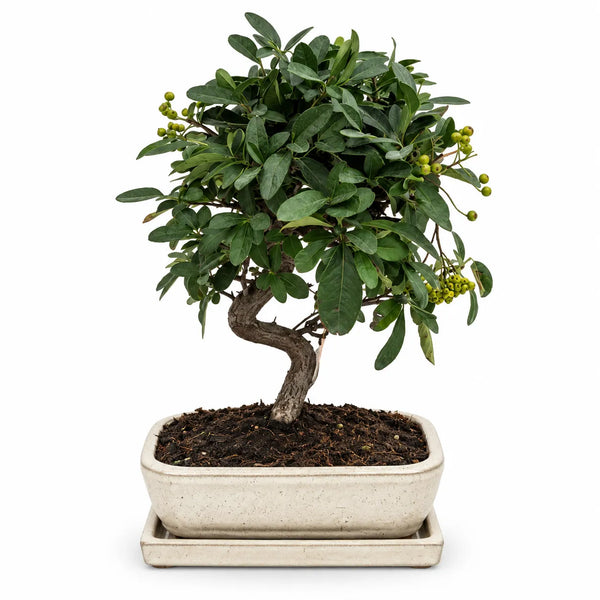
A 9-year-old outdoor bonsai, among the most spectacular for the wealth of color it offers in every season. Pyracantha coccinea, known as agazzino or firebush, captivates with its abundant white spring blossoms and clusters of intense orange-red berries that color the branches from late summer through the depths of winter. A generous, vibrant bonsai with great visual impact, ideal for sunny gardens, balconies, and terraces.
Included in the kit: Bonsai + Pyracantha coccinea saucer.
Important notes: The bonsai’s shape and dimensions are approximate (including the pot). The color and shape of the pot may differ from the photographs. As these are living plants, their appearance changes with the seasons; the images are therefore for illustrative purposes only and do not constitute a contractual obligation.
The name Pyracantha derives from Greek: pyr (fire) and akantha (thorn) – literally “fire thorn”, a tribute to the fiery color of its berries and the density of the thorns that protect its branches. Although the berries are not suitable for human consumption, they provide valuable nourishment for birds during the winter months, turning the bonsai into a small, living ecosystem.
Place it outdoors in full sunlight or partial shade. Good sun exposure promotes abundant flowering and berry production. It tolerates winter cold well, as well as brief frosts, but should be protected from very harsh, prolonged temperatures below -5°C.
Regular and moderate: water generously in summer during active growth, and reduce watering in winter. Avoid waterlogging, which can cause root rot. Pyracantha is relatively drought-resistant once acclimatized.
From spring to autumn, use Hiryo Gold organo-mineral fertilizer or the fast-acting Nutribonsai fertilizer. Do not fertilize during flowering to avoid compromising berry production. Resume fertilization once the fruit has appeared.
Every 2–3 years, in spring before vegetative growth resumes. Proceed carefully to avoid damaging the fine roots. After repotting, watering with Mistral Bonsai’s Vitabonsai revitalizer is recommended to speed up the plant’s recovery.
Terrabonsai – a special bonsai substrate that meets the plant’s water and nutritional needs, promoting root development and overall vigor. Alternatively: 60% Akadama + 40% Kiryuzuna, which provides excellent drainage.
After flowering, between June and July, to preserve the buds that will produce the autumn berries. A second light pruning can be carried out in late winter to maintain the structural shape. Beware of the thorns during pruning: protective gloves are recommended.
During the growing season: pinch the new shoots, leaving 1–2 pairs of leaves, to encourage branching and maintain a compact canopy.
Can be carried out year-round, preferably in spring and early summer. Take particular care with the thorns when working on the branches.
I terrarium viaggiano su pallet dedicato. Puoi procedere in due modi alternativi: